The world is not indifferent to Iran's hijab protests
We are used to hearing Iran's name in connection with support for terrorist organizations, Holocaust denial, cyberattacks and the pursuit of nuclear weapons. That is the reality we have known since Iran's Islamic Revolution. Older readers may remember different days, marked by cooperation, business and peaceful relations. Believe it or not, Persian oil once flowed to Europe through the Eilat-Ashkelon pipeline.
But something has been happening in Iran recently that exposes its real story: an extremist Islamic dictatorship imposing strict laws and repressing the public. Perhaps more than anyone, Iran's true victims are its own residents, who endure poverty and a repressive regime that does not hesitate to use violence.
We cannot predict whether the unrest that recently erupted in Iran will destabilize the regime and bring hopeful change, or whether the regime will manage to suppress the protests. There is undoubtedly a sense of hope in Iran now, but it comes at a cost in blood.
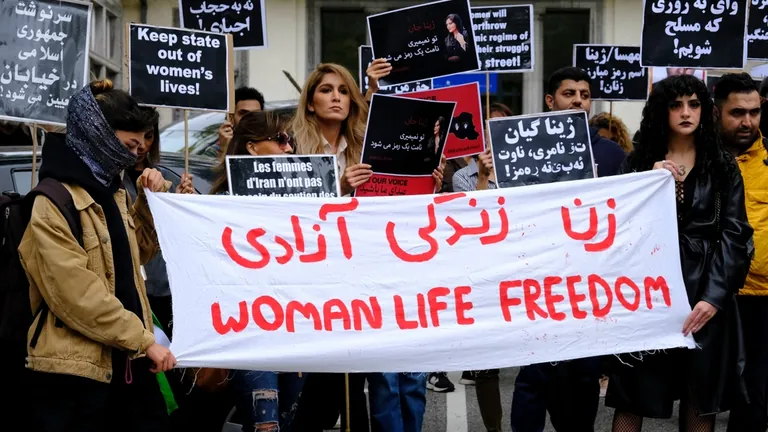
Mahsa Amini's chilling story spread around the world and drew expressions of empathy. According to eyewitnesses, Iran's morality police beat and tortured Amini because she was not wearing her hijab properly. Human rights, women's and democracy organizations strongly condemned the act. Rallies were held around the world, and substantial support is visible on social media; here in Tel Aviv, too, we could see it across TikTok accounts.
Tehran-born singer Rita also spoke to the opposition outlet Iran International, expressing support for Iranian women. "All women in the world are Mahsa Amini," she said in the interview.
Iran's familiar narrative
Blaming outsiders is a familiar feature of dictatorial regimes. Iran did not invent it; dictators are known for cultivating a foreign enemy that harms their country and is blamed for all its problems. It is therefore unsurprising that Iran's government organized "spontaneous demonstrations" featuring angry chants against Israel. This is nothing new; it has always been Iran's narrative. This time, however, it appears not to be working. Every Iranian can see that a fundamental issue is at stake. Israel may rub its hands in satisfaction and hope Iran's terrorist regime collapses, but this is clearly an internal Iranian matter.
Even within Iranian domestic politics, voices are expressing sympathy for the younger generation's demands for greater freedom and less religious coercion.
Iran's national football stars went further, expressing sympathy for protesters and even wearing black jackets during last month's friendly against Senegal. Iran is a football powerhouse, and with the World Cup approaching, the authorities genuinely fear that football could fuel the unrest.
Alexandros Michailidis / Shutterstock.com