From radar to microwaves and missiles to pills: military technologies that quietly entered civilian life
Waze on your phone, the microwave in your kitchen and a medical examination without a tube: each has a military past. How battlefield developments reached our homes, and what that transition teaches us.
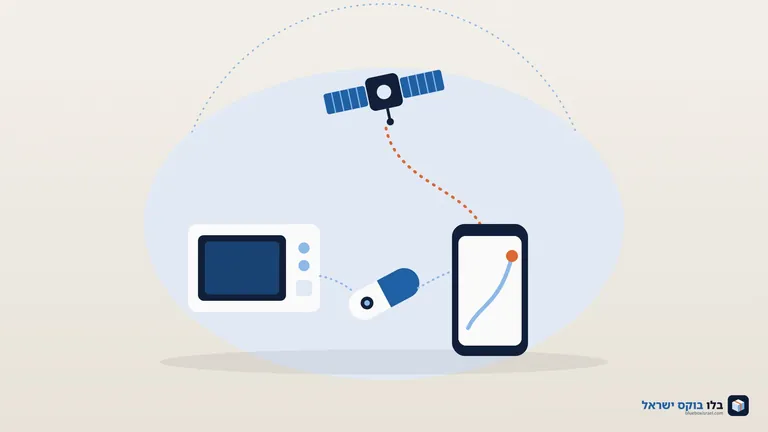
When your phone tells you to turn right in 300 metres, it relies on satellites still operated by the United States Space Force. When you heat leftovers in the microwave, you use a relative of Second World War radar. And if a doctor has ever sent a family member to swallow a tiny camera instead of having an invasive examination, that idea began in Rafael's missile division. Military technology does not stay on bases. It spreads beyond them, sometimes through careful planning and sometimes because of a mistake, a disaster or a chocolate bar melting in a pocket.
A chocolate bar, a magnetron and an oven weighing 340 kilograms
Percy Spencer worked at the American company Raytheon, which produced radar equipment on a vast scale during the Second World War. He did not invent the magnetron, the component that generates microwaves in radar, but developed a method for mass-producing it. According to the often-repeated story, told among other places on MIT's website devoted to inventors, one day he stood beside an operating magnetron and noticed that the chocolate bar in his pocket had melted. A patent application was filed in October 1945 and granted in 1950.
The first commercial microwave oven, called the Radarange, a name that makes its origins clear, reached the market in 1947. It cost about $3,000, weighed around 340 kilograms and stood nearly two metres tall. Many more years passed before it reached home kitchens. That is the first pattern to remember: the transition from military to civilian use is almost never immediate. It requires lower costs, smaller dimensions and someone who recognises a product opportunity.
A disaster in the skies that opened GPS to everyone
Satellite navigation was built by the US Department of Defense for military purposes. On 1 September 1983, a Soviet fighter jet intercepted Korean Air Flight 007 after it strayed into Soviet airspace, and 269 people died. Following the disaster, President Ronald Reagan decided to accelerate opening the system to civilian use and offer it free of charge, so that such navigation errors would not recur.
But even after it opened, civilians received a deliberately less accurate version through a method called "selective availability." Only in May 2000 did President Bill Clinton order its discontinuation, dramatically improving the accuracy of civilian navigation devices overnight. Every navigation app, trackable delivery and taxi booked with a tap rests on that decision.
Here comes the second lesson, one Israelis know closely: what the military provides, the military can also disrupt. In recent years, drivers in Gush Dan and northern Israel have seen their location suddenly jump to Beirut airport because navigation signals were deliberately disrupted for security reasons. The technology passed into civilian hands, but control over it did not entirely follow.
The internet and the nuclear war myth
ARPANET, the network from which the internet grew, was funded in the late 1960s by ARPA, the US Department of Defense's research agency, and its first connection was established in 1969. This gave rise to a persistent myth: the internet was built to survive nuclear war. The real story is more complicated. Ideas about an attack-resistant communications network were indeed being written about at the time, but people involved in creating ARPANET have repeatedly explained that its immediate aim was much more modest: allowing researchers at different universities to share expensive, scarce computers.
This is a good example of what happens when stories are told about military technology: the dramatic version spreads faster than the accurate one. When reading about a "military invention that changed the world," ask who is making the claim, on what basis, and whether it distinguishes military funding from the original purpose.
The Israeli story: a missile's eye inside the human body
In Israel, this transition happened through people more than products. Dr Gavriel Iddan worked in Rafael's missile division and proposed taking the knowledge accumulated there in miniaturising cameras and sensors and turning it into a medical product: a pill-sized camera that a patient swallows to photograph the digestive tract from inside. Given Imaging was founded in 1998 and received US Food and Drug Administration approval for examining the small intestine in August 2001. In 2014, the company was acquired by Covidien, which was itself acquired by Medtronic a year later.
This path, a defence engineer seeing another use for the same knowledge, recurs throughout Israel's high-tech industry, particularly in cybersecurity, where veterans of IDF technology units have founded many civilian companies. It is worth distinguishing fact from slogan: military experience provides knowledge, connections and the ability to work under pressure, but most successful civilian products were completely rebuilt for a different market, with customers, regulation and pricing unrelated to the battlefield.
In the other direction: when a civilian toy reaches the battlefield
The flow is not only one-way. In the war in Ukraine, for example, small commercial drones of the kind sold to wedding photographers and aerial photography enthusiasts became routine tools for both sides: for observation, adjusting fire and later attacks, as extensively documented by media outlets and research institutes around the world. Cheap cameras, phone batteries and open-source software developed entirely in the civilian world found themselves at the front.
The implications matter even to readers with no interest in military affairs. Whereas armed forces once provided the exclusive source of advanced technology, some innovations now come from electronics shops and apps. This also raises new regulatory questions: who may fly a drone near an airport, which components may be exported, and how civilian facilities can be protected against tools anyone can buy.
Four lessons from the transition from military to civilian use
- There is always a time gap. Decades passed between the wartime magnetron and the kitchen microwave. With today's technologies too, something presented as an impressive military innovation may reach civilian use only years later, if at all.
- Whoever controls the system sets the rules. Satellite navigation is a perfect example: a free service for everyone that can still be disrupted or restricted for security reasons.
- The dramatic story is not always true. The nuclear network myth is a reminder to check sources, especially when technology comes wrapped in a military aura.
- Civilian use is sometimes more important than the original purpose. Few remember the radar behind the microwave, but almost every household uses one.
Readers interested in the other side of the equation, technologies still at the military stage, can find coverage of military technologies in Hebrew alongside reporting on conflicts and defence industries in the Middle East and around the world. Some systems described there today, such as radar, drones and electronic warfare, may be part of everyday civilian life in twenty years, just like the satellites guiding us home.
Technology remembers where it came from
Most days, nobody thinks about radar when pressing the heating button, or a 1983 aviation disaster when looking for parking. That is fine. But this history explains something important about our world: much of our convenience was built on investments driven by fear, war and preparation for the worst. Technology itself is neutral. What matters is who holds it, when they decide to share it, and what we do when it finally reaches our pocket.