Noose-shaped pins distributed at a Herzliya high school: questions parents can put to the school
Handasaim High School staff collected pins handed out by an Otzma Yehudit representative at an election panel on 5 October. The municipality says distribution was prohibited in advance; the party defended the message. Alongside clarifying the incident, parents can ask how boundaries are set for meetings with political representatives.
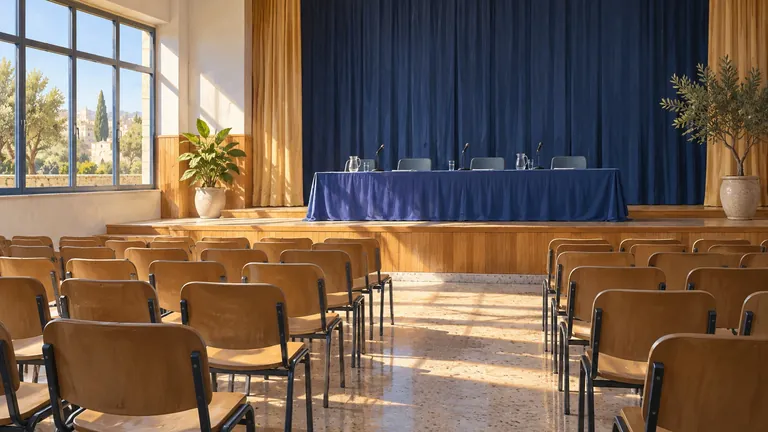
An Otzma Yehudit representative distributed noose-shaped pins to students during an election panel at Handasaim High School in Herzliya on 5 October 2026. According to a Walla report, school staff intervened and collected the pins from students. The Herzliya municipality said the school's administration had made clear in advance that distribution would not be permitted and that its secondary education department was handling the matter with the administration.
The incident raises a practical educational question: how can students encounter public disagreement while the conditions a school sets for its guests are upheld? Answering it requires distinguishing between establishing what happened in Herzliya and examining the rules governing such meetings at any institution.
What is known about the incident and the responses
Sharon Online identified the representative as David Bavli. According to the site, he participated in a "Voters' Day" panel alongside representatives of other parties. The site also reported that Mayor Yariv Fisher said the representative would not be invited to Herzliya again.
In a response published by Walla, Fisher condemned the distribution and emphasized that many of the students were minors. Otzma Yehudit defended the move, linking the pin to its support for the death penalty for terrorists and deterrence against terrorism. That is the party's position; it does not in itself answer whether distribution complied with the meeting's rules.
Sharon Online stated at the time of its report that the Ministry of Education's response had not yet been received. The publications reviewed contained no ministry determination concerning the incident. The municipality's condemnation or the party's response should therefore not be presented as a legal conclusion.
Encountering views and learning to examine them
A review published by the Israel Democracy Institute on 7 September examined the tension between preparing students for civic participation and protecting them from propaganda. The authors, Meital Baron and Dafna Kahana Dolev, describe two components of the Ministry of Education's preparations: instructions regulating activities in schools and teaching materials designed to help students understand the election.
The review refers to guidance documents from previous election campaigns that required exposure to a range of views and avoidance of party propaganda. It is not a decision about what happened at Handasaim High School. Assessing a specific incident also requires examining the applicable procedure and the conditions given to participants.
Educationally, a panel can also be assessed through what happens around it: which questions students prepare, whether they can compare answers, and how claims made during the discussion are revisited in class. These concern the quality of learning, beyond the guests' identities.
What parents can clarify before the next meeting
Parents seeking to understand how a similar event is planned can approach the class teacher or administration and ask about the activity's purpose, the participant list and the rules provided to them. Ask explicitly whether distributing materials or symbols was permitted, who supervises the meeting and what is planned if someone breaches the conditions.
Following an incident that raises concerns, a useful inquiry will distinguish between what the child witnessed personally, what the school communicated and what remains unclear. Parents can request a written response about how the incident is being handled and about a follow-up discussion with students. These are suggestions for inquiries with staff, not a determination that any specific obligation exists to provide every document or hold every activity.
In Herzliya's case, the open question is what will be determined after the municipal response and whether further guidance will be published. Meanwhile, the practical information parents can request is straightforward: what the rules are, who is responsible for enforcing them and how students are told what happened when, according to the school's account, they were broken.