Nebius acquires Israel's Inferize to reduce the wait before AI models can start working
Inferize, founded earlier this year, is joining Nebius's Token Factory platform. The acquisition targets a costly AI infrastructure problem: computing resources waiting for a model to become ready.
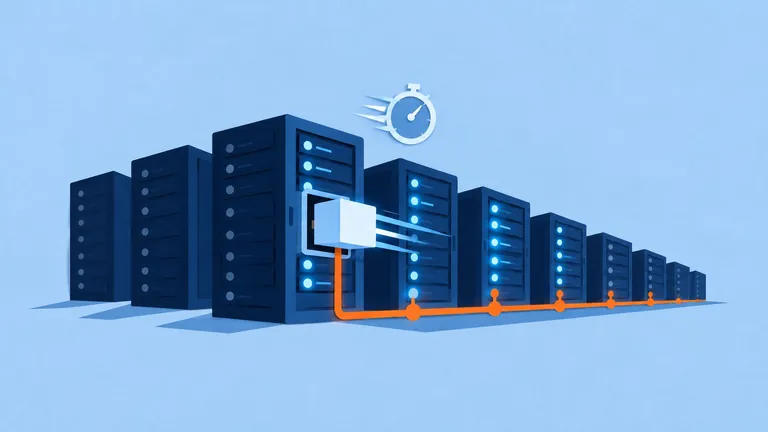
AI infrastructure company Nebius announced on 1 October that it had acquired Inferize, a young Israeli company developing technology to shorten the time required to start AI models and increase their working capacity. The team and technology are joining Token Factory, Nebius's model-serving platform. Deal terms were not disclosed, so the financial estimates published in the media are not a confirmed purchase price.
The deal concerns something most AI users never see: the wait between allocating computing resources and the moment a model is ready to respond. For operators of large services, time when an expensive processor is not yet serving customers still forms part of the service's cost.
A company founded this year joins an existing platform
According to Nebius's acquisition announcement, Inferize was founded in January 2026 and produced a working prototype within three months. Nebius said the company's engineers would join work on the platform, beginning by integrating their technology. This is an acquisition of a team and technological capability intended for an existing service, not the announcement of a new consumer app.
Calcalist reported that Guy Bortnikov and Lior Gorbunos, members of Granulate's founding team, established the company, which employed 17 people in Tel Aviv. That evening, CTech, Calcalist's English-language technology site, reported that Bortnikov had disclosed a previously unannounced $10 million early funding round led by TLV Partners.
That background helps explain how a young company can reach a significant deal early in its life. It does not measure revenue, paying customers or profitability. Those details were not provided in the acquisition announcement and should not be replaced by employee numbers or funding size.
The problem begins before the first answer
The industry uses "inference" to describe running an already-trained model to obtain a result, such as an answer to a question or an analysis of information. Before a model can work, its execution environment must be prepared and the information needed for computation loaded. This preparation time is sometimes called a "cold start."
The problem is not unique to Inferize. A technical publication from Nvidia in May 2026 describes several stages that can add up during the startup of an inference environment, including loading model weights and preparing the execution engine. The publication concerns Nvidia tools, not a test of Inferize, but illustrates why fast startup is a recognized infrastructure challenge.
Two measurements must also be distinguished. Reducing the time needed to prepare another copy of a model does not necessarily reduce each answer's generation time by the same amount once the model is running. Both may matter to the service operator, but they measure different problems. A deal addressing one does not prove improvement in all the others.
When demand changes, capacity must adapt
Nebius describes a situation in which rising demand requires additional copies of a model to be started. While they load, some of the computing resources allocated to them are not providing the service for which they were purchased. Capacity can be kept ready in advance, but that also carries a cost when actual demand is lower.
A simple illustration is a service receiving few requests during one part of the day and many during other hours. If scaling is slow, the operator must decide how much capacity to keep ready beforehand. Shorter preparation may narrow the gap between what is needed now and what is held in reserve. This illustrates the challenge; it is not a description of a particular customer or a company performance figure.
In its own LinkedIn post, Inferize also said the aim was to let workloads adapt to demand and save GPU resources. These processors are used for AI computation, among other purposes. The statement describes the development goal; it does not specify a uniform saving for every model, infrastructure setup and customer.
The platform Inferize is joining
On Token Factory's product page, Nebius presents a service for running, scaling and customizing open models. It offers different usage options, including a service in which customers access a model through a software interface without planning all the infrastructure in advance, alongside dedicated capacity for production needs.
The distinction helps explain the acquisition. A business using a model does not necessarily want to manage every server and loading process itself. It may prefer to pay for a service that handles those tasks. The provider, however, still has to manage the cost and availability of the hardware behind the simple interface.
According to the product description, the platform is intended to support the move from experimentation to continuous use, as well as model customization with organizational data. Integrating Inferize into such an environment therefore addresses an operational need: how far activity can expand without keeping unnecessary resources. The question is not just whether a single demonstration starts quickly, but how the system behaves over time and under changing loads.
The price was not disclosed, and savings have not yet been quantified
Globes estimated the deal's value at $100 million to $130 million, while Calcalist reported an estimate of $100 million to $150 million. The difference is another reason not to present a particular figure as fact. Both ranges rest on journalistic reporting, while the companies have not published the terms.
For users in Israel, the announcement does not immediately change the price of an AI subscription, a particular app's service level or the availability of a new product. Even if an infrastructure provider reduces costs, customer pricing is a separate decision. There is no basis for promising that the acquisition will make a particular public-facing service cheaper.
The next tests will be integration and performance data: under which loads improvement was measured, how much time was saved and what is required to run the technology. Publishing test and comparison conditions would help assess benefits beyond the statements. For now, the announcement clearly answers what Nebius wanted to add: the ability to put computing resources to work faster when demand requires it.