How to dispose of appliances and electronic waste in Israel, and what to check before the delivery team arrives
A large appliance being replaced, an old phone and a drawer of batteries need not leave your home the same way. Choose the right collection route, record the arrangements and handle personal data before handing anything over.
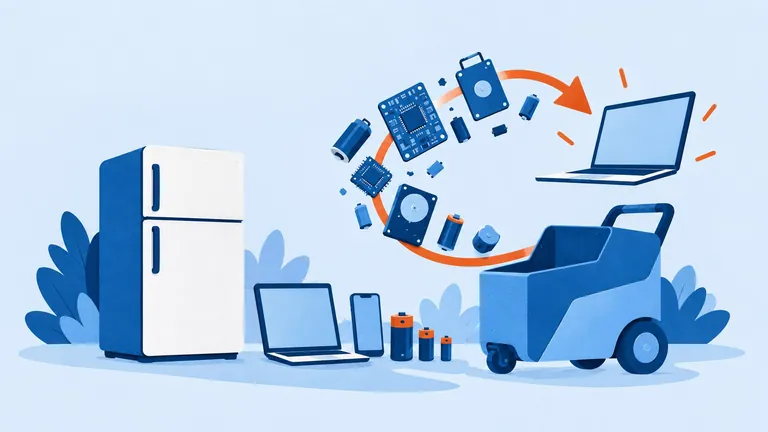
The new refrigerator is already on its way, but you only remember the old one when arranging delivery. An unused computer is also waiting in the study, while cables and batteries have accumulated in a drawer. To get them out of the house properly, start by separating three tasks: collection when buying a replacement, delivery to a collection point, and handling personal data left on devices.
In Israel, sellers are required to accept similar old electrical and electronic equipment when new equipment is purchased, subject to conditions. Local collection arrangements also operate. Availability, the handover procedure and suitability for your type of device must be checked before arriving. The information on rights and obligations in this guide is general and does not replace inquiries about an individual case or legal advice.
Sort by the equipment's condition and collection route
Start with a short list of what you have at home. If a working device is intended for reuse, check that a person or organization is willing to accept it. Equipment being discarded needs an appropriate collection route. Do not assume every charity accepts every product, and do not pass on a faulty appliance without describing the fault to the recipient.
Separate small items you can carry from large equipment that requires arrangements. A phone, laptop and washing machine have different transport and preparation needs. Do not set out with a full car boot before confirming that your destination accepts every item during the hours you intend to visit.
Batteries also have a dedicated collection route. The Ministry of Environmental Protection details obligations concerning return points at businesses selling batteries and accumulators. However, check suitability for the type of battery: a household battery container does not authorize you to leave any large battery or accumulator in it.
If a device or battery appears damaged, swollen or leaking, tell the receiving organization before transporting or handing it over. Do not dismantle a built-in battery to fit it into a container. Seek appropriate instructions from the manufacturer or a qualified professional, and do not mix a potentially hazardous item into an ordinary bag of equipment without checking first.
Buying new equipment: ask about removing the old item when ordering
According to the Ministry of Environmental Protection's information on electronic waste, the arrangement allows similar old equipment to be returned when new equipment is purchased. Similarity concerns use and quantity or weight; it does not require the same brand or that the old product was bought from the same business. This does not mean that buying one appliance entitles you to removal of all the equipment accumulated at home.
As a rule, acceptance or removal under the arrangement is free, but conditions and exceptional collection cases apply. When buying, ask for details of the arrangement and any relevant exceptional charges. If purchasing online, also ask how the delivery method affects the return of the old product; do not assume every collection method entitles you to the same service at home.
When arranging collection, provide useful details: what the appliance is, where it is, whether there is a suitable lift, the width of passageways and whether dismantling is required. Collection terms may include exceptions concerning stairs, a crane or dismantling. Ask exactly what counts as exceptional in your case, and request the answer and any charge in writing.
A description such as "there is a lift" is not necessarily enough. You need to know whether the appliance can fit inside it and through the openings along the route. There is no need to measure every centimetre of your apartment without reason, but if you already know the previous refrigerator was brought in after doors were removed, that is a detail to provide in advance. It may change the preparations for collection.
How to arrange and prepare an orderly handover
- List the items and their condition. Identify which are being replaced through a new purchase, which may be suitable for reuse and which are destined for electronic waste collection.
- Choose a route for each item: the seller supplying a new product, a local collection point or a suitable removal service. Check in advance that the recipient accepts that type of equipment.
- Agree on a date, address and handover conditions. For collection from your home, describe access and any dismantling required, and request a written breakdown of any proposed payment.
- For devices containing data, complete a backup and check that the files you need are accessible. Then disconnect accounts and erase data according to the manufacturer's instructions, before the device leaves your control.
- Prepare the equipment physically according to the conditions: empty, accessible and disconnected as required. Arrange separately any disconnection work that needs a professional, rather than improvising.
- On the handover date, make sure the equipment taken is what was agreed. Keep order documents, correspondence, any payment receipt and, where possible, confirmation of handover.
- If collection does not happen, request a documented reason and follow-up from the party that committed to the service. Do not leave equipment outside without appropriate instructions from the local authority.
If household members share the task, decide who is responsible for backing up data and who handles the arrangements. A device that looks ready beside the door may still contain someone else's information. A simple internal label showing what is ready for collection and what still needs attention can prevent the wrong device from leaving too soon.
No new purchase: check the local arrangements
Look on your municipality or local council's website for information about electronic waste, batteries and appliances. You can contact the local service centre and ask for a collection point's address, opening hours, list of accepted items and home collection conditions, if offered. Do not assume every locality provides the same service or charges the same price.
For example, Tel Aviv-Yafo Municipality publishes information on collection points for electronic waste and batteries. Its information illustrates why you should check who may use a particular point: a collection facility inside an institution is not necessarily open to everyone at any time. Check the details of the specific location, rather than just its appearance on a list.
For a large appliance, ask whether the service includes carrying it from inside the apartment or whether you are expected to hand it over somewhere else. These are different services. Also check whether advance booking is required and whether incomplete or non-working equipment is accepted. It is better to get a clear answer before moving a heavy machine and blocking a passage in your home.
If paid collection is offered, ask who is removing the equipment and what treatment route it will enter. Keep the order details and receipt. There is no need to assure yourself that every component will be recycled in a particular way; the practical point you can check is that the handover takes place through a recognized arrangement suited to your type of waste.
In a rented apartment, check who owns the appliance before making arrangements. A refrigerator or oven included in the apartment's contents is not necessarily yours, even if you use it every day. Written arrangements with the equipment's owner should clarify what is leaving, what is coming in and who handles the costs. If the device belongs to another family member, make sure they agree to the handover and have removed anything they need. This prevents a simple collection from ending in the loss of equipment or a dispute that could have been avoided.
Handle data before handing over a computer or phone
Before erasing anything, decide what must be kept: photos, documents, contacts and files stored only on the old device. Check the copy elsewhere and open a few important files. Seeing a photo in the phone's gallery does not prove that a separate copy will remain accessible once the phone has been handed over.
Be careful about deleting from a synchronized library. Apple explains that changes and deletions in iCloud Photos synchronize across devices, and that synchronized photos are not also duplicated in the device's iCloud backup. Use the manufacturer's instructions for preparing a device for handover, rather than manually deleting albums in the hope that only the local copy will disappear.
After verifying the backup, follow the official sequence for the model and operating system: transfer data as needed, handle accounts and locks, and erase the content or perform the appropriate reset. Also check whether there is a memory card or physical SIM card to remove. Do not give anyone your account passwords so they can "sort it out later."
A computer or phone that will not turn on presents another difficulty: you cannot assume the data disappeared with the fault. If there is no way to carry out a documented erasure, consult a professional service about handling the storage medium before handover. Do not smash the device or try to dismantle a battery or components without appropriate knowledge. For work equipment, contact the IT administrator before taking any action.
Common mistakes on collection day
Do not wait for the doorbell to ring before emptying a refrigerator or finding out who disconnects an appliance from utilities. The collection procedure requires preparation, and professional disconnection is not necessarily part of the delivery service. Request product-specific instructions in advance, particularly when it is connected to gas, water or a fixed installation.
Do not assume that collection of garden waste, cardboard or furniture also covers electronics. Separate packaging from the appliance according to local instructions, and do not load other rubbish bags inside a large appliance. This could prevent its acceptance even when the appliance itself is suitable for the collection route.
If a seller refuses collection that you believe falls within the arrangement, document the reason and contact customer service. You can inquire about contacting the Ministry of Environmental Protection as appropriate to the circumstances. Order documents, a description of access conditions and the response you received will help establish what was promised and what actually prevented collection.